Cluster Feeding: Why Newborns Want to Feed Constantly (and What to Log)
· 2 min read
Some evenings a newborn wants the breast every half hour, feeds for a short stretch, then asks again. It can feel like milk has disappeared. Often it is cluster feeding: a normal pattern, especially in the early weeks and around growth spurts.
This guide explains a common feeding pattern. It isn't medical advice. If you are worried about supply, weight or diapers, talk to your midwife, health visitor, lactation consultant or pediatrician.
What cluster feeding is
Cluster feeding is when a baby wants several feeds close together, often followed by a longer gap. Many parents notice it most in the evening. The HSE describes it as feeding very often at certain times, then longer stretches without feeding, and notes it is common around growth spurts.
It is more common in newborns, but older babies can cluster feed too. Each growth-spurt stretch usually lasts a few days. Frequent feeding is also how supply adjusts: more milk removed leads to more milk made.
Cluster feeding can happen with bottle feeds of breast milk or formula as well. With bottles, be careful not to push volume past what the baby wants; paced feeding and hunger cues still matter.
Cluster feeding is not the same as low supply
Short, frequent evening feeds on their own do not prove that milk is running out. More useful checks sit beside the clock:
- Wet and dirty diapers over 24 hours (see How many wet diapers should a newborn have?).
- Weight trend at checkups (see Baby weight percentile).
- Whether the baby has periods of calm after some feeds, and whether you can see or hear swallowing during feeds.
If diapers and weight are on track, evening clustering is often a phase. If they are not, or you are in pain, or you are worried, get help early rather than waiting the phase out.
What a log helps with
On broken sleep, every feed blurs into the last one. A simple log answers the questions people ask the next day:
- How many feeds in the last 24 hours?
- Were they bunched in the evening?
- Which side did the last proper feed finish on?
- How do today's wet diapers compare with yesterday?
You do not need to time every second. Start and end times for breastfeeds, side switches, bottle amounts, and diaper taps are enough.
How BabyTrack+ fits
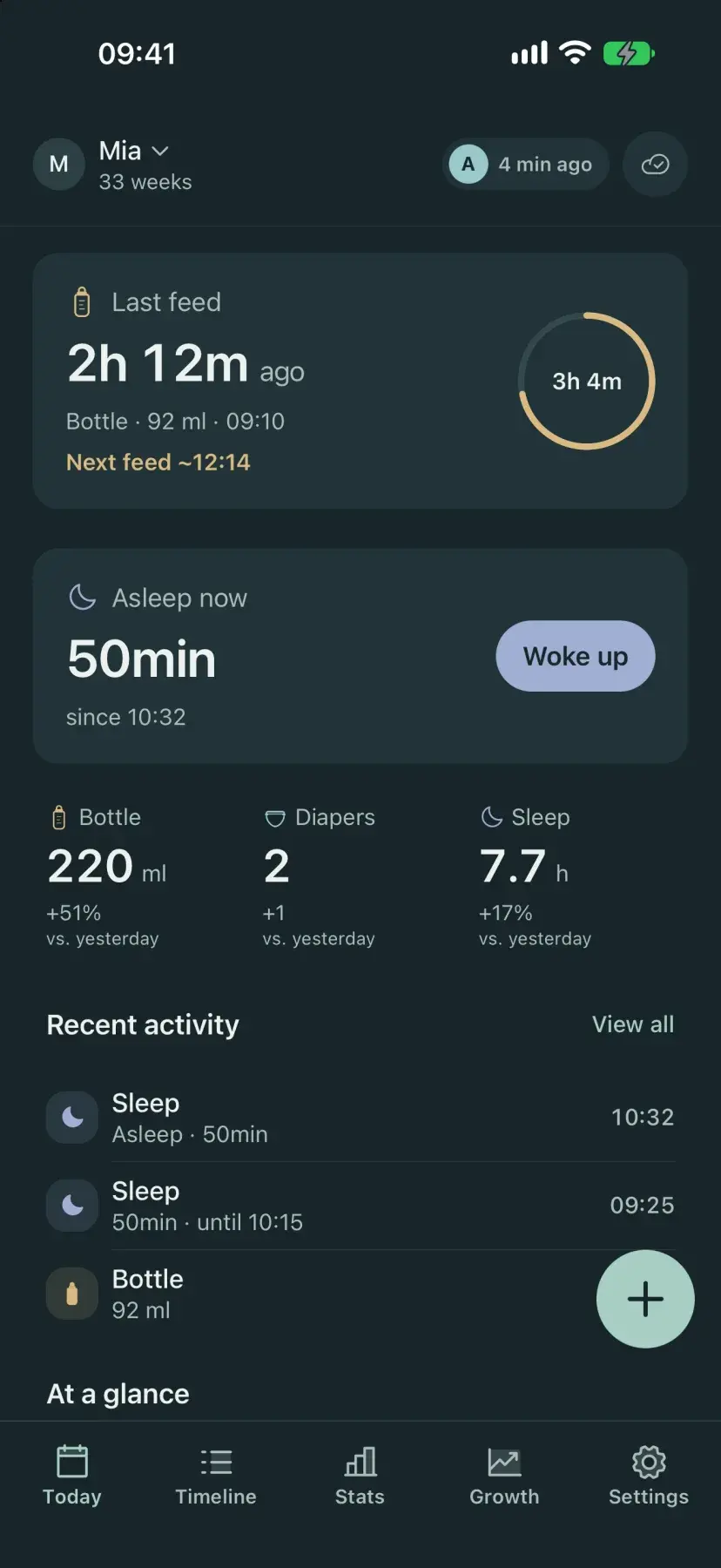
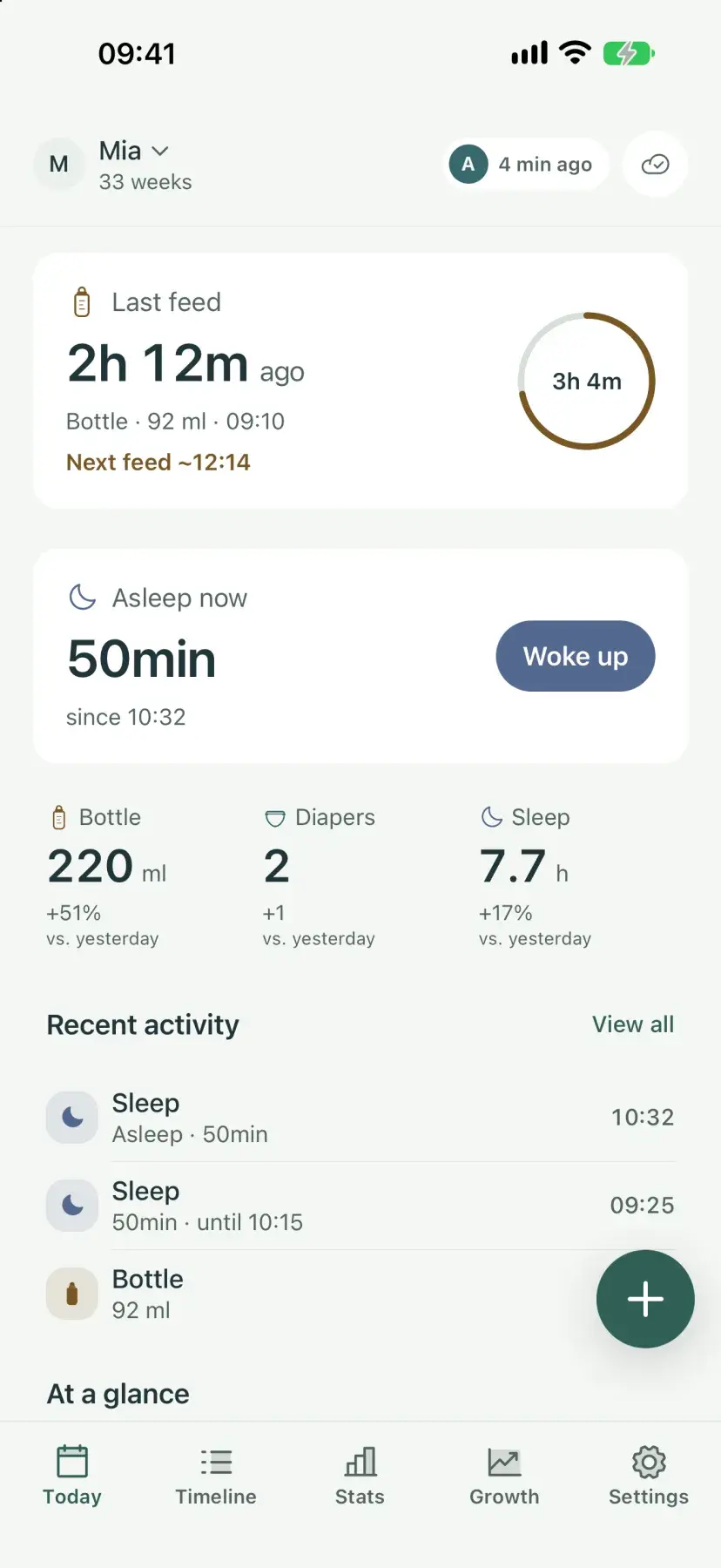
BabyTrack+'s breast timer tracks each side and lets you switch mid-feed. The Today screen shows how long ago the last feed was. Day and week stats put today's feed count next to yesterday's, which makes an evening cluster visible without mental arithmetic. Diapers live in the same timeline.
For the wider newborn feeding picture, see How often should a newborn feed?. For sides at 3 a.m., see Which side did I feed on last?. When two people share care, see How to share a baby log with your partner.
Sources
Keep the log in one place
BabyTrack+ records feeds, diapers, sleep, solids, and growth on your phone, offline. Free for one baby.