How Many Wet Diapers Should a Newborn Have? A Day-by-Day Guide
· 3 min read
You can't see how much milk a breastfed newborn drinks. Midwives and health visitors look at diapers instead. Here is what the usual day-by-day counts are, and what is worth writing down.
This guide explains common public-health guidance. It isn't medical advice. If wet diapers are well below these numbers, or you are worried for any other reason, call your midwife, health visitor or pediatrician.
Why diapers matter
Wet diapers are one of the simplest signs that milk is going in and coming out. They sit next to other signs: rhythmic sucking and swallowing at the breast, a baby who seems settled after many feeds, and steady weight gain after the first few days.
They do not replace those other signs. One quiet diaper morning means little on its own. The last 24 hours matter more than any single change.
Day-by-day wet diapers
NHS (UK)
From the NHS page on whether your baby is getting enough milk:
- In the first 48 hours, a baby is likely to have only 2 or 3 wet nappies.
- From day 5 onwards, expect at least 6 heavy, wet nappies every 24 hours.
- From the fourth day, expect at least 2 soft, yellow poos about the size of a £2 coin every day for the first few weeks.
Disposable nappies can feel dry even when they are wet. The NHS suggests taking an unused nappy and adding 2 to 4 tablespoons of water, then feeling that, so you know what "heavy" means in your hands.
CDC (US)
The CDC publishes a minimum table for the first week:
- Day 1: minimum 1 wet diaper and 1 poop.
- Day 2: minimum 2 wet diapers and 3 poops.
- Day 3: minimum 5 wet diapers and 3 poops.
- Day 4: minimum 6 wet diapers and 3 poops.
- Day 5–7: minimum 6 wet diapers and 3 poops.
After the first week, poop colour for babies receiving only breast milk is often yellow and can look seedy. After about 6 weeks, the number of poops a day may drop. Wet diapers remain a useful daily check.
The NHS and CDC numbers are close after the first days, and both treat around 6 heavy wet diapers a day as the steady pattern once milk is in. Follow the guidance your midwife or pediatrician uses in your country.
What to log
You do not need a perfect spreadsheet. For the first weeks, these entries answer what professionals ask:
- Every diaper, marked wet, dirty, or both, with the time.
- Every feed (side and length for breastfeeds; amount for bottles).
- Weight checks from the clinic, with the date.
Looking at today next to yesterday is more useful than staring at one line. A short feed or one lighter diaper hour is normal. A whole day well under the wet-diaper count is the signal to call.
How BabyTrack+ helps
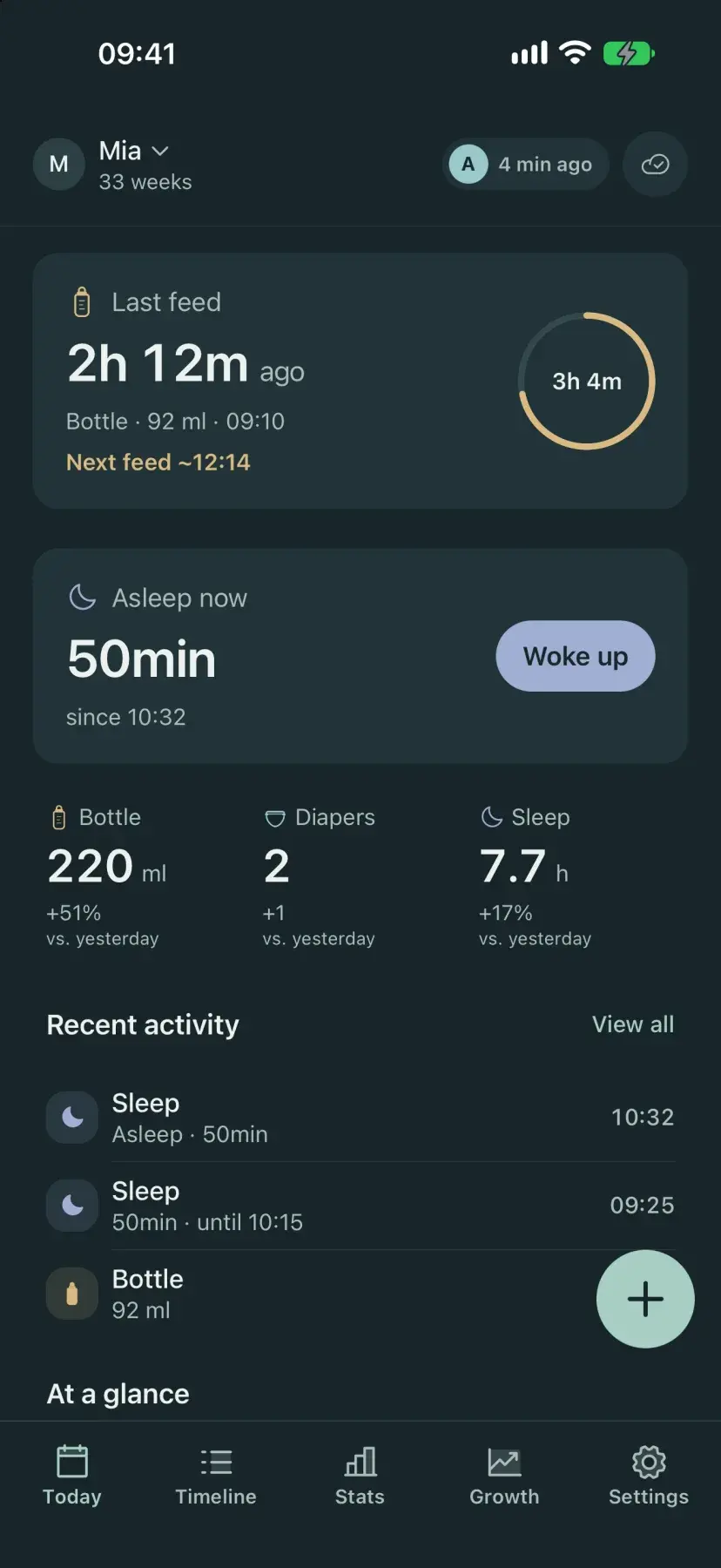
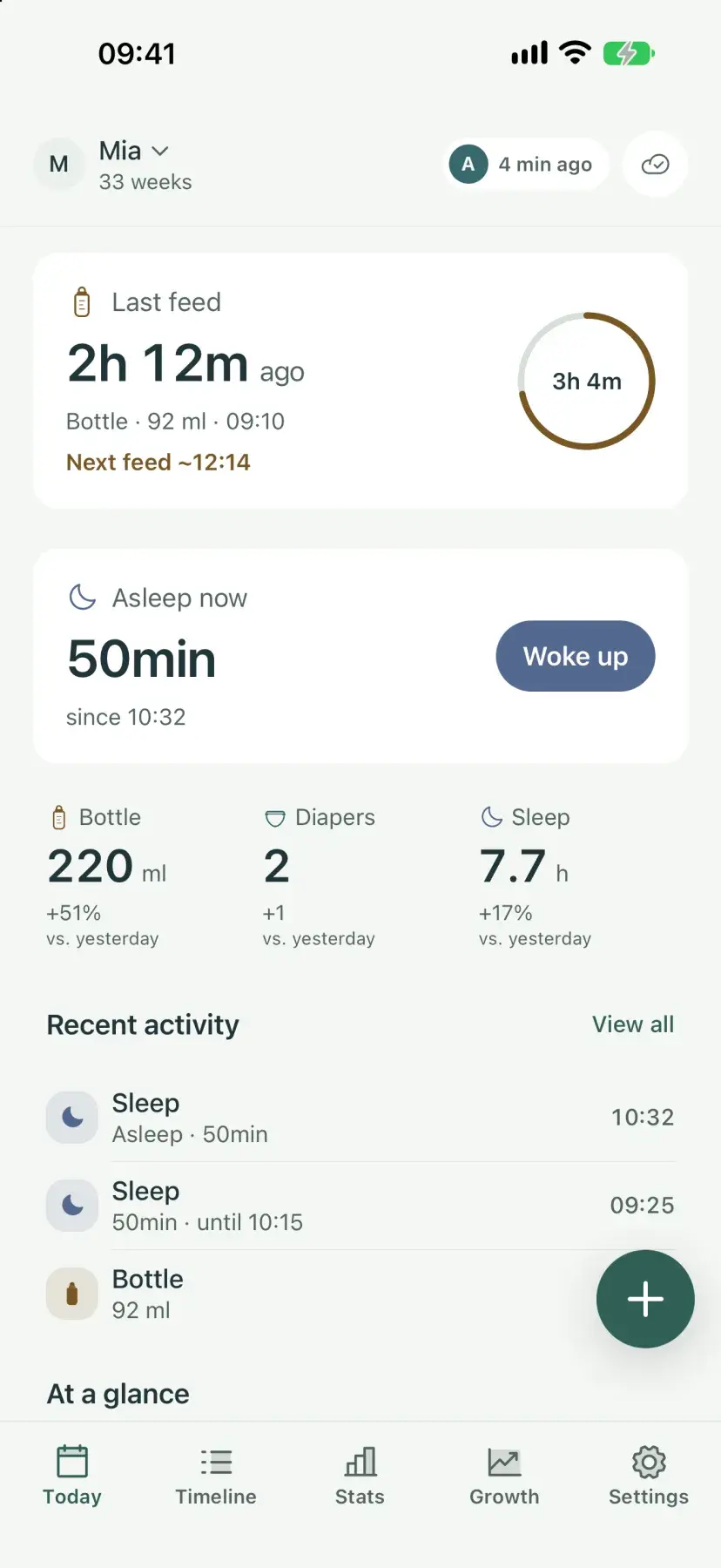
In BabyTrack+, diapers are one tap for wet, dirty, or both. The Today screen shows today's totals next to the latest entries, and day and week stats put feeds and diapers beside yesterday and the recent average. It works offline, with no account for one baby.
Feeds sit in the same timeline, so the diaper count and the feeding pattern stay together when you talk to your midwife. For how often newborns usually feed, see How often should a newborn feed?. For which breast you used last, see Which side did I feed on last?.
Sources
Keep the log in one place
BabyTrack+ records feeds, diapers, sleep, solids, and growth on your phone, offline. Free for one baby.