Baby Weight Percentile: What It Means on a WHO Growth Chart
· 2 min read
At almost every early checkup, someone writes down a weight and says a percentile. Here is what that number means, what it does not mean, and how to look at the line instead of a single dot.
This guide explains growth charts. It isn't medical advice. If you are worried about your baby's weight or feeding, talk to your midwife, health visitor or pediatrician.
What the percentile means
A weight-for-age percentile compares your baby's weight with other babies of the same age and sex. If the weight is on the 25th percentile, about 25 in 100 babies that age weigh less and about 75 weigh more.
It is a position, not a score. A baby on the 9th percentile can be as healthy as one on the 91st. Clinics do not aim for the 50th.
Where the numbers come from
BabyTrack+ uses the WHO Child Growth Standards (2006) for weight, length and head circumference. They describe how children grow in good conditions, based on the WHO Multicentre Growth Reference Study of healthy breastfed children in several countries.
In the US, the CDC recommends WHO charts from birth to age 2. In the UK, the red book uses UK-WHO charts, mostly built on the same WHO data, with more centile lines. Other countries may use their own charts, so a percentile from an app and a percentile from a clinic can differ slightly.
For how to read the curves in general, see How to read WHO growth charts. For head size specifically, see Baby head circumference percentile.
The line matters more than one weigh-in
Almost all newborns lose some weight in the first days. Most are back to birth weight within two to three weeks. After that, what professionals watch is whether your baby follows their own curve over time.
Small moves of about one centile line can be normal measurement noise. Crossing two centile lines is less common and worth asking about. It does not automatically mean something is wrong.
One weigh-in can be off: different scales, a full diaper, or timing since the last feed all add noise. Several measurements tell you more than one.
Check a measurement
Our free WHO percentile calculator takes your baby's sex, date of birth and weight (and optionally length and head circumference), and shows the percentile. It works up to 24 months. Everything is calculated in your browser; nothing you enter is sent or stored.
Keeping a record between visits
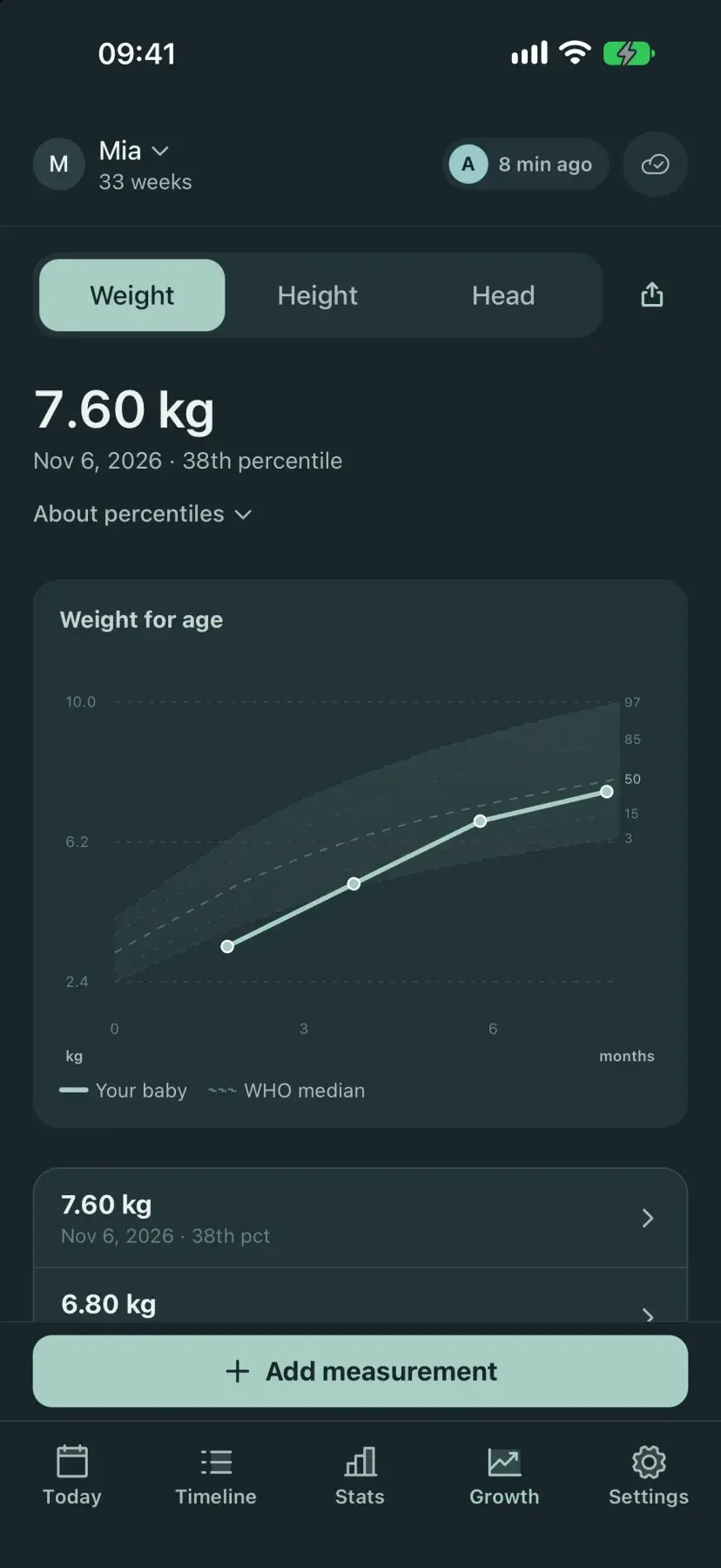
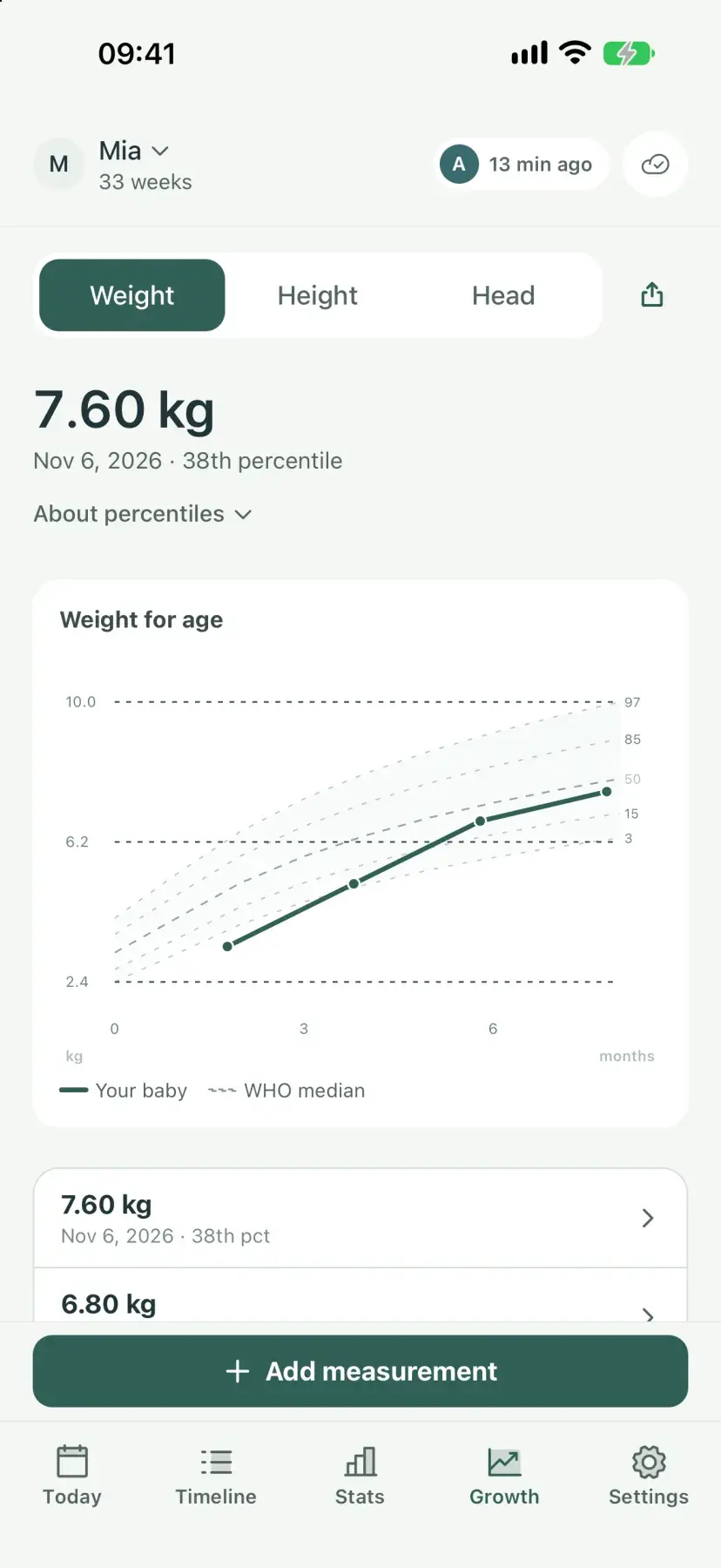
Clinic visits are weeks apart. In BabyTrack+, the growth tab keeps weight, length and head circumference together on WHO percentile curves for boys or girls, offline, with no account for one baby. When someone asks how weight has been since the last visit, you have every date and number to hand.
Feeding and wet diapers belong next to the weight line in the early weeks. See How often should a newborn feed? and How many wet diapers should a newborn have?.
Sources
Keep the log in one place
BabyTrack+ records feeds, diapers, sleep, solids, and growth on your phone, offline. Free for one baby.